Is It Legal to Use AI to Screen Job Candidates? What Recruiters Need to Know
Yes, in most places. Stay safe with four habits: a person makes every decision, candidates are told, results are checked for bias, data is protected.
- Less legal risk
- Fairer hiring
- Better candidate experience
Nov 17, 2026 · 11 min read
You already paste CVs into ChatGPT, or your ATS just switched on an "AI match score", and somewhere in the back of your mind a voice asks: am I allowed to do this? Fair question. The rules are new, and most of what you find online is vendor marketing or a 40-page legal memo.
The short answer: yes, using AI to help screen candidates is legal in most places. To stay safe everywhere, keep four habits: a person makes the final decision (clicking "reject all" on a low score doesn't count), candidates know AI is involved, you check the results for bias and you protect their data. Some places, like the EU, New York City and Illinois, turn those habits into rules; ask your lawyer about yours. There's an 8-line self-check at the end to run before any new tool.
This article explains the rules in plain words. It is not legal advice. Facts checked when we wrote it.
Can AI make the hiring decision?
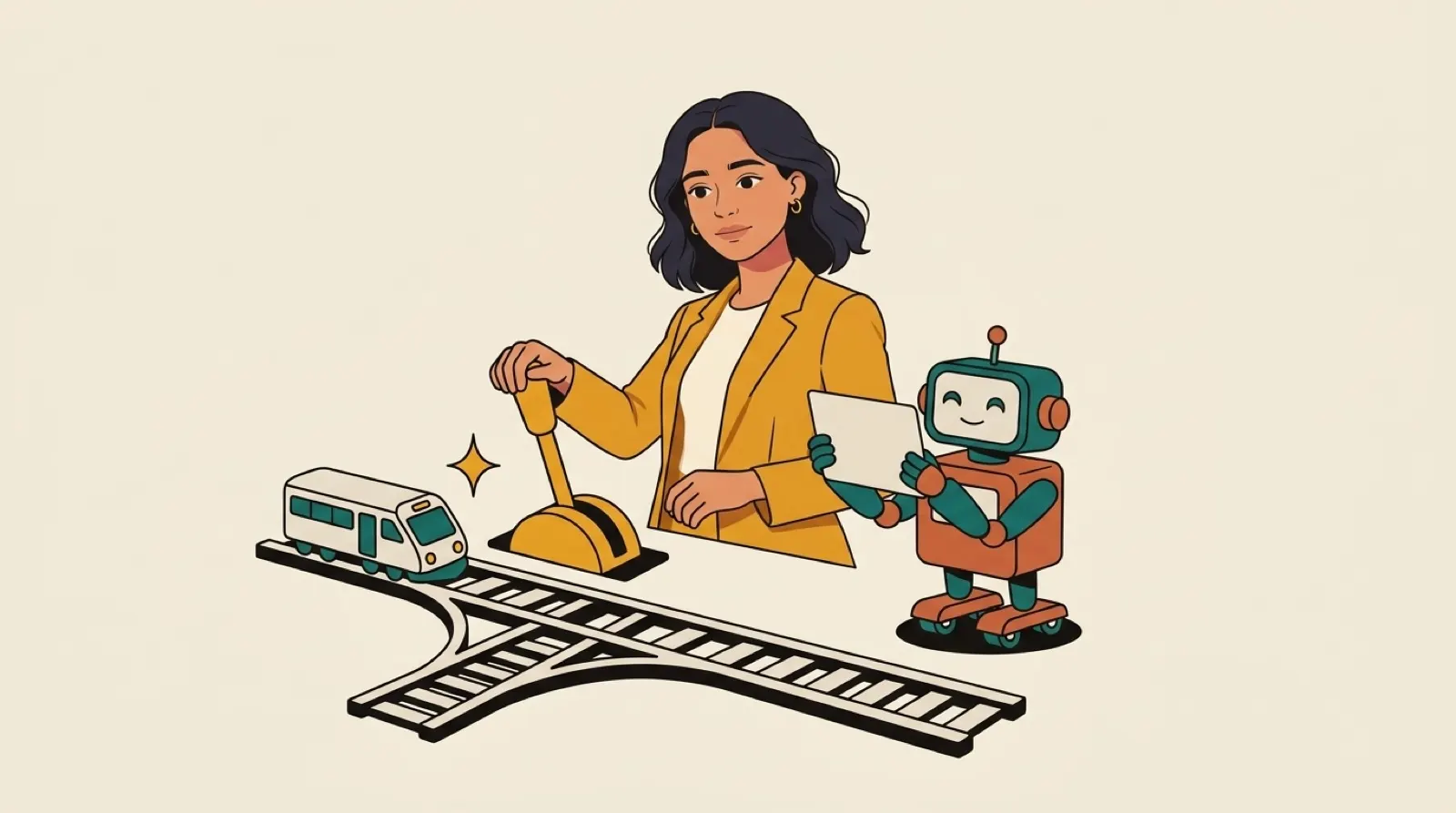
Not on its own. The safe line, and the one most rules point to: AI can sort, summarize and suggest. A person decides.
In Europe this is written into law. The GDPR gives people the right not to be subject to a decision "based solely on automated processing" when it significantly affects them (GDPR Article 22). The recitals that explain it name "e-recruiting practices without any human intervention" as an example (Recital 71). Exceptions exist, but even then the person gets the right to a human review and to contest the decision.
The EU AI Act goes further. It lists AI used "to analyse and filter job applications, and to evaluate candidates" as high-risk (Annex III, point 4). Employers using such a tool must assign human oversight to people with "the necessary competence, training and authority" (Article 26). These high-risk duties were due in August 2026. The Digital Omnibus on AI, given final approval in June 2026, moved them to 2 December 2027 (Regulation (EU) 2026/1744).
"A person decides" has to be real. A recruiter who clicks "reject all" on everyone scored below 60 is signing an automated decision. A real review means seeing why the tool ranked someone low, having time to look, and being allowed to disagree.
Do I have to tell candidates?
In more and more places, yes. And even where nobody forces you, it's the fair thing to do.
- EU: under the GDPR, your privacy notice must say if you use automated decision-making and give "meaningful information about the logic involved" (Article 13). Under the AI Act, employers using a high-risk system must tell the people it's used on, and tell workers and their representatives before using it at work (Article 26), once those rules apply.
- New York City: if you use an "automated employment decision tool" on candidates for jobs in the city, you must notify them at least 10 business days before using it, and the tool must have had a bias audit within the past year, with a summary of the results published (NYC Local Law 144, enforced since July 5, 2023).
- Illinois: since January 1, 2026, the state's Human Rights Act requires notice when AI is used in hiring decisions (HB 3773; the detailed rules were withdrawn in June 2026, but the duty stands). AI video interviews also need an explanation and consent first (more below).
One line in your job ad covers the honest part: "We use AI tools to help organize applications. A person on our team reviews every application and makes every decision." Whether that's enough where you hire is a question for your lawyer.
What about bias?
This is the real legal risk, and it needs no AI law. Anti-discrimination law already covers hiring, and it looks at outcomes, not intentions. If your process screens out older candidates, women or people with disabilities at a higher rate, "the software did it" is not a defense.
Two US cases show how this plays out:
- iTutorGroup. The company's application software automatically rejected women aged 55 and older and men aged 60 and older. More than 200 qualified applicants were screened out. The company paid $365,000 to settle with the US Equal Employment Opportunity Commission (EEOC, September 11, 2023). It wasn't even AI, just a hard-coded rule. The law didn't care.
- Mobley v. Workday. Job seekers over 40 say Workday's AI recommendation system got them rejected again and again. In July 2024 a federal court let the claim go ahead against Workday as the "agent" of the employers using it, and in May 2025 it let the age claim go forward as a collective action (order of May 16, 2025). The case is still in court, with no finding yet that the software discriminated.
The lesson isn't that vendors are now on the hook instead of employers. Everyone in the chain can be. The EEOC said in 2023 guidance that an employer can be responsible for a discriminatory selection tool "even if the test was developed by an outside vendor". That guidance was taken down in early 2025, but the anti-discrimination laws it described did not change (Cooley, 2025). In June 2026 the EEOC went further and said it will stop bringing disparate-impact cases (its enforcement plan of June 4, 2026). Candidates can still sue on their own, and state laws still apply.
The bias is real. A University of Washington study ran more than 550 real CVs against 500 job listings through three open language models, changing only the name (Wilson and Caliskan, 2024):
Same CV, different name. The rest were ties. Black male names were never favored over white male names.
Source: University of Washington, Wilson and Caliskan, AIES 2024 (UW News, October 31, 2024)
Show the data
| White- or male-associated names | Black- or female-associated names | |
|---|---|---|
| Race (white vs Black names) | 85% | 9% |
| Gender (male vs female names) | 52% | 11% |
The models in that study were open models, not the assistants you use at work. In our own test for screening CVs with AI, one tool praised a candidate's military unit after the prompt told it to ignore it.
Is it legal to paste a CV into ChatGPT or Claude?
Usually yes, if it's a work account your company approved, candidates were told their data may be processed this way, and you removed what the tool doesn't need. A CV is personal data almost everywhere, so the usual privacy rules apply: have a reason, tell the candidate, keep it secure, don't keep it forever. In practice, the risk is mostly about where you paste:
- A personal, free account may train on what you type, and your company doesn't control it. Wrong place.
- A company-approved account, with a data processing agreement and training turned off, is the right place.
- Remove what the tool doesn't need first: names, contact details, photos, ID numbers, date of birth, health or family. It cuts privacy and bias risk at once.
Which data rules apply depends on where you and your candidates are, so ask your lawyer. More on candidate consent when you paste resumes.
What about AI video interviews?
There's a big difference between AI that transcribes and summarizes what a candidate said, and AI that scores the candidate's face, voice or "emotions". The first is a note-taker. The second is the kind of tool the law is starting to ban.
- EU: the AI Act bans AI that infers people's emotions at the workplace, except for medical or safety reasons (Article 5(1)(f)). This ban has applied since February 2, 2025, and the European Commission's guidelines say it covers emotion recognition during recruitment, not only of current staff (Commission guidelines, 2025).
- Illinois: since January 1, 2020, employers who use AI to analyze recorded video interviews must tell candidates AI may be used, explain how it works and what it looks at, and get their consent first. Videos may be shared only with people needed to evaluate the candidate, and must be deleted within 30 days if the candidate asks (Artificial Intelligence Video Interview Act).
If a vendor promises to read "confidence", "enthusiasm" or "honesty" from a video, walk away. It's already banned in the EU, regulated in Illinois, and hard to explain to a candidate who asks why they were rejected.
What to do now
For a small team, five things cover most of the risk:
Write down which AI tools touch hiring, and what each one does: drafts, summarizes, ranks or decides. Include the AI features inside your ATS. "Decides" should be an empty column.
Keep a person on every reject. The AI can sort into groups. A recruiter reads the "unlikely" pile before anyone gets a no.
Tell candidates. One honest line in the job ad or application form, and a way to ask for a human review.
Use approved accounts only, and strip personal details before pasting. No CVs in personal ChatGPT accounts.
Look at your numbers. Every few months, check whether any group drops out more at the AI-assisted step:
- From your ATS, export the candidates who went into the AI step and the ones who came out of it.
- For each group you can see, divide "came out" by "went in".
- If one group's rate is clearly lower, stop using the tool for rejects and take the numbers to your lawyer and your vendor.
If you hire in New York City or the EU, ask them what formal audit you need too.
Before you add any new AI tool to your hiring, run this quick self-check:
QUICK SELF-CHECK: AI IN HIRING
[ ] Does a person make every reject decision, with time to really review?
[ ] Can we explain why the tool ranked a candidate low?
[ ] Do candidates know AI is used, and can they ask for a human?
[ ] Did we remove personal details the tool doesn't need?
[ ] Is the data in a company-approved account, not a personal one?
[ ] Does the tool avoid reading faces, voices or emotions?
[ ] Have we checked results by group (age, gender, and so on)?
[ ] Do we know which local rules apply where we hire (EU, NYC, Illinois...)?
Any "no" is the place to start. Any "not sure" is a question for your lawyer.
FAQ
Does the EU AI Act apply to me if I'm not in the EU? It can. The AI Act also covers companies outside the EU when the AI's output is used in the EU (Article 2), so hiring candidates for EU roles may bring you in, even from abroad. Ask your lawyer how it applies to your setup.
If my ATS vendor says its AI is "compliant", am I covered? No. You're still responsible for your hiring decisions. Ask the vendor for its bias audit, what data the model uses, and whether a person can override every score.
Do I need consent to use AI on applications? It depends where you hire. Illinois requires consent for AI analysis of video interviews. NYC and the GDPR mainly require notice. Telling candidates clearly is the safe default everywhere.
Next step
The safest place to start is a task where a person checks every result. Our guide to writing structured interview questions with AI is a good first one: it makes your interviews fairer, and AI never decides anything.
This article is general information, not legal advice. Laws differ by country and change often, so consult your lawyer before you rely on it for your situation.